.png&w=384&q=75)
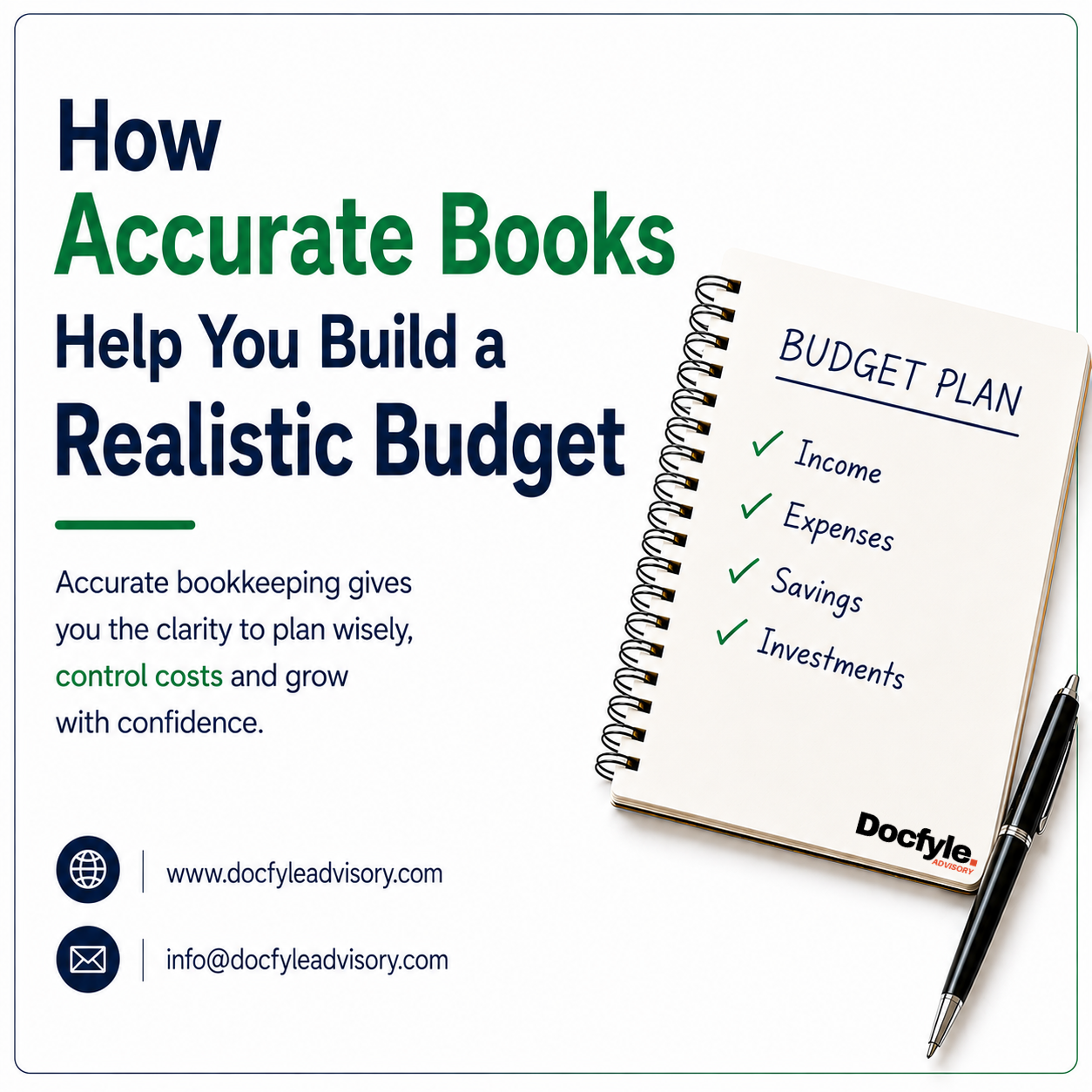
Creating a business budget is more than estimating how much money your company will earn and spend. A realistic budget depends on having accurate, up-to-date financial information. When your books are properly maintained, you can make better financial decisions, control unnecessary costs, and plan for sustainable growth.
How Accurate Books Help You Build a Realistic Business Budget
Creating a business budget is more than estimating how much money your company will earn and spend. A realistic budget depends on having accurate, up-to-date financial information. When your books are properly maintained, you can make better financial decisions, control unnecessary costs, and plan for sustainable growth.
Why Accurate Bookkeeping Matters for Budgeting
Bookkeeping provides a clear picture of your business's financial health. Accurate records help you understand your actual income, expenses, outstanding payments, and cash flow.
Without reliable financial data, a budget may be based on assumptions rather than facts. This can lead to overspending, unrealistic revenue expectations, or unexpected cash-flow problems.
1. Understand Your Actual Income
Accurate books show how much revenue your business is generating and where that revenue comes from.
By reviewing historical income, you can identify:
- Your average monthly revenue
- Seasonal changes in sales
- Your most profitable services or products
- Outstanding customer payments
- Revenue trends over time
This information helps you create realistic revenue targets instead of relying on guesswork.
2. Identify and Control Business Expenses
A detailed bookkeeping system makes it easier to see where your money is going.
You can categorize expenses such as:
- Payroll and employee costs
- Office expenses
- Marketing and advertising
- Software subscriptions
- Rent and utilities
- Professional services
- Travel and business expenses
Once you understand your spending patterns, you can identify unnecessary costs and make informed decisions about where to reduce expenses.
3. Create a More Realistic Cash-Flow Plan
Profit and cash flow are not always the same. A business may be profitable on paper but still experience cash shortages if customers delay payments or expenses become due before revenue is collected.
Accurate bookkeeping helps you monitor incoming and outgoing cash, allowing you to plan for upcoming obligations and maintain sufficient working capital.
4. Plan for Future Growth
Reliable financial records make it easier to determine whether your business can afford future investments.
For example, you may be considering:
- Hiring additional employees
- Purchasing equipment
- Expanding your services
- Increasing your marketing budget
- Opening another location
- Investing in new technology
With accurate financial data, you can evaluate these decisions based on your business's actual financial capacity.
5. Set Better Financial Goals
A realistic budget gives you a measurable financial roadmap.
Instead of setting broad goals such as "increase profits," you can establish specific targets for revenue, expenses, savings, and investments.
Regularly comparing your actual results against your budget also helps you identify problems early and adjust your strategy when necessary.
6. Make Better Business Decisions
Accurate books provide the financial clarity you need to make confident decisions.
When your records are organized and current, you can quickly answer important questions:
Are we spending too much?
Which areas are generating the most revenue?
Can we afford to hire?
Is our cash flow healthy?
Are we on track to meet our financial goals?
Having reliable answers allows business owners to focus on growth rather than trying to reconstruct financial information.
7. Prepare for Unexpected Expenses
Every business faces unexpected costs, from equipment repairs to sudden operational expenses. Accurate financial records help you understand how much flexibility your budget has to handle these situations.
By reviewing past expenses and maintaining realistic cash-flow projections, you can build an emergency reserve into your budget. This reduces the risk of having to make rushed financial decisions when unexpected costs arise.
8. Improve Financial Forecasting
Accurate bookkeeping also makes financial forecasting more reliable. When you have consistent records from previous months and years, you can identify patterns and estimate future performance more effectively.
This allows you to prepare for slower periods, plan major expenses in advance, and set achievable financial targets. Better forecasting can also help you communicate your financial plans more clearly with stakeholders, lenders, or investors.
9. Monitor Budget Performance Regularly
Creating a budget is only the beginning. Your actual financial performance should be reviewed regularly against your budget.
Monthly comparisons can show whether expenses are higher than expected or whether revenue is falling below your target. Identifying these differences early gives you time to adjust spending, improve collections, or revise your plans before small issues become bigger problems.
Build Your Budget on Reliable Numbers
A successful budget starts with accurate bookkeeping. When your financial records are complete, organized, and up to date, your budget becomes a practical planning tool rather than simply a list of estimates.
Accurate bookkeeping gives you the clarity to plan wisely, control costs, and grow with confidence.
Need Help Keeping Your Books Accurate?
Managing bookkeeping while running a business can be time-consuming. Professional bookkeeping support can help you maintain organized financial records and provide the financial clarity needed for better budgeting and decision-making.
Docfyle Advisory can help businesses maintain accurate books and stay focused on their growth.
Website:www.docfyleadvisory.com
Email:info@docfyleadvisory.com